
Digiscape's Device-level Diagnosis for Enterprise IT
E2E feature design enabling faster single device analysis and fleet management for service desk teams.
B2B SaaS
Product design
Conversational AI
ROLE
Product Designer
INDUSTRY
IT Automation (EUEM and Fleet Management)

Digiscape is an End User Experience Monitoring (EUEM) tool that enables enterprises to track the health of employee devices across large organizations.
Imagine a fitness tracker but for a large fleet of devices.
The PROBLEM AREA
Service desk personnel are responsible for resolving dozens of device-related tickets every day under strict time pressure.
They must quickly identify which issues need immediate attention, balance VIP devices with other critical problems, and make decisions with incomplete or fragmented information

Who are we designing for?
Meet Arjun,
L2 - Service Desk Engineer
"My job is to efficiently resolve tickets directly assigned to me, and escalated by L1. Tickets I receive generally need some level on data analysis."


Dave,
L3 - System Administrator
"I get to resolve tickets assigned to me, or escalated by Arjun. I need to analyze data before I can successfully resolve any issue. I also oversee VIP devices."
and Zoe
Service Desk Manager
"I oversee and manage the team, and report to leadership on the quality of the IT environment. "

4+ hours for 1 critical issue, with majority of resolution time spent on diagnosis.
with an avg. of 20-30 tickets daily, imagine the pressure and cognitive load that Arjun has to deal with.
Solution
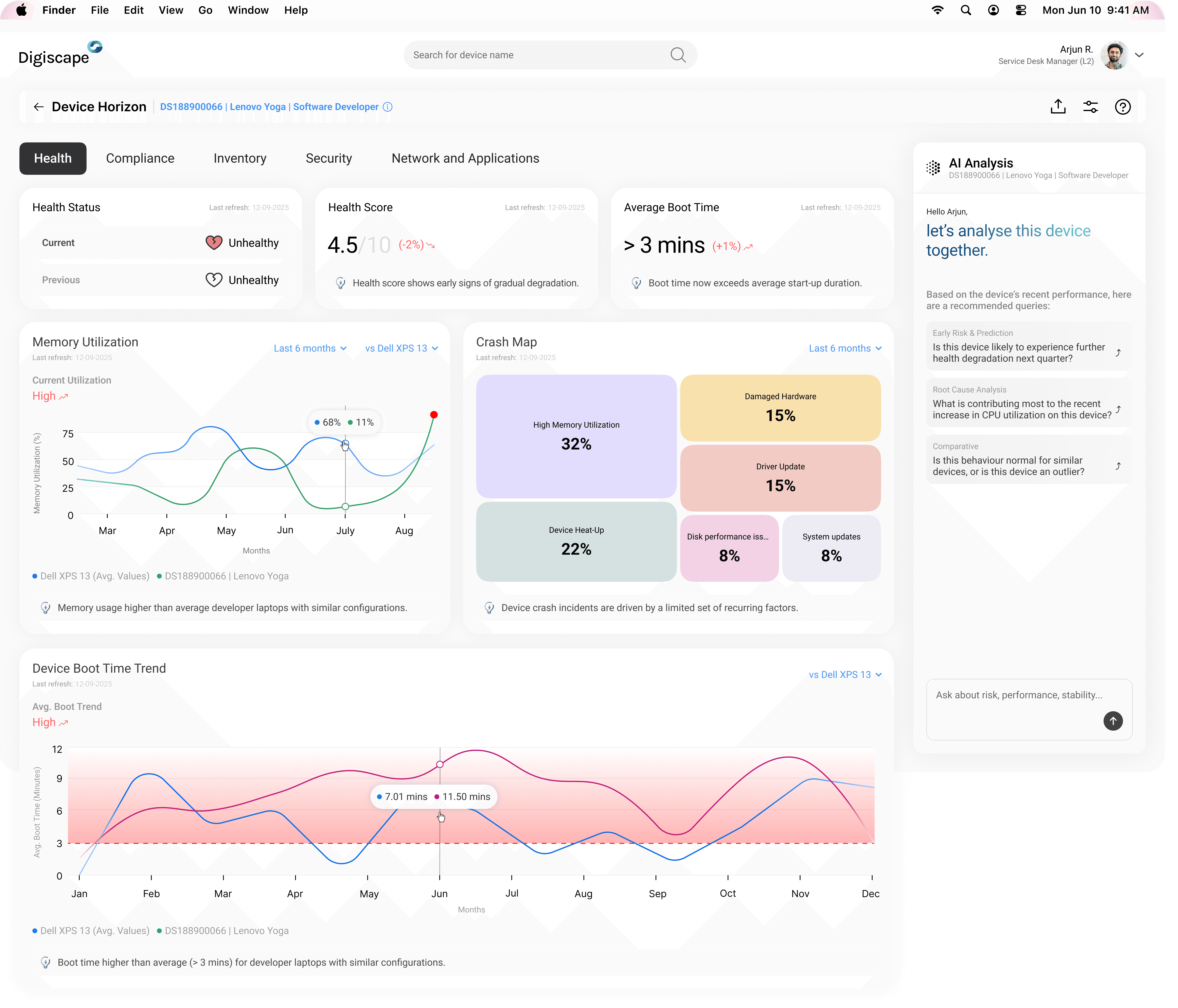
Device Horizon
One-stop Tool for device level analysis, issue prevention and decision making.
take a 5 seconds breather, i know you've been looking at portfolios all day
Industry context
What is EUEM, and why does it matter?
Imagine this, you're at your computer, your programs won't run, your web is slow, or your corporation's software takes forever to launch—that’s a poor user experience.
IT teams have EUEM tools in their corner, allowing them to monitor, analyze, and optimize system performance for users. They monitor a range of factors, including app speed, crash frequency, network performance, and even how humans use software. The goal is to head off problems before they become big headaches, boost productivity, and make technology run seamlessly.
It matters, because It's about getting technology working for people with ease.
So what changed for Digiscape?
Managing IT Across
Borders
With the workforce spread across cities and countries, it is a mammoth responsibility to maintain a healthy IT environment for any enterprise.
Proactive Device Management
Digiscape identified the need for an easy way to analyze device-level data to get to the root cause of issues, identify patterns and maintain device health.
Components
End user Application
Sits on the employee’s device and sends data to the dashboard
Digiscape Dashboard
Insightful data access to the service desk manager
Key findings
What did we find talking to the personas?
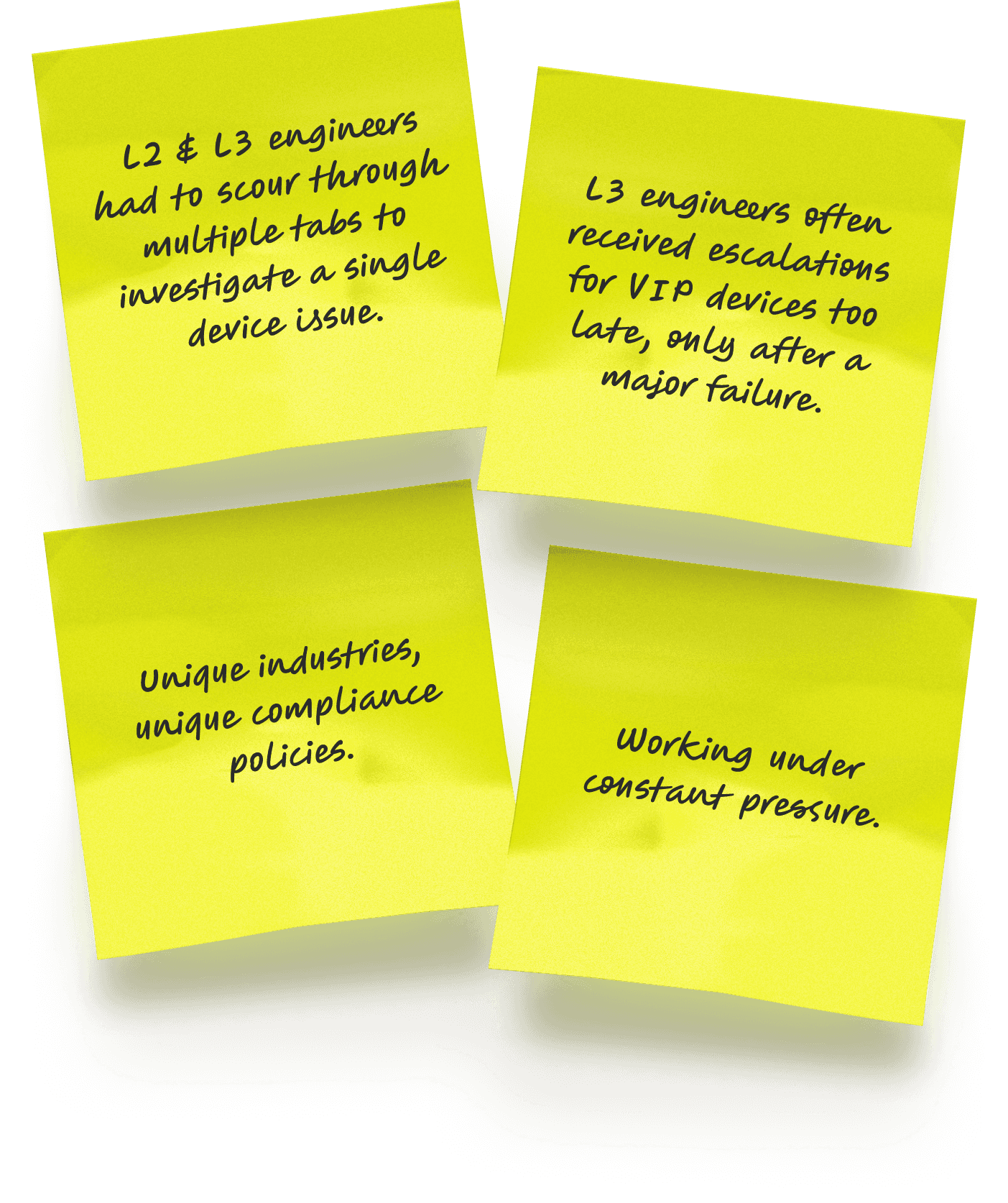
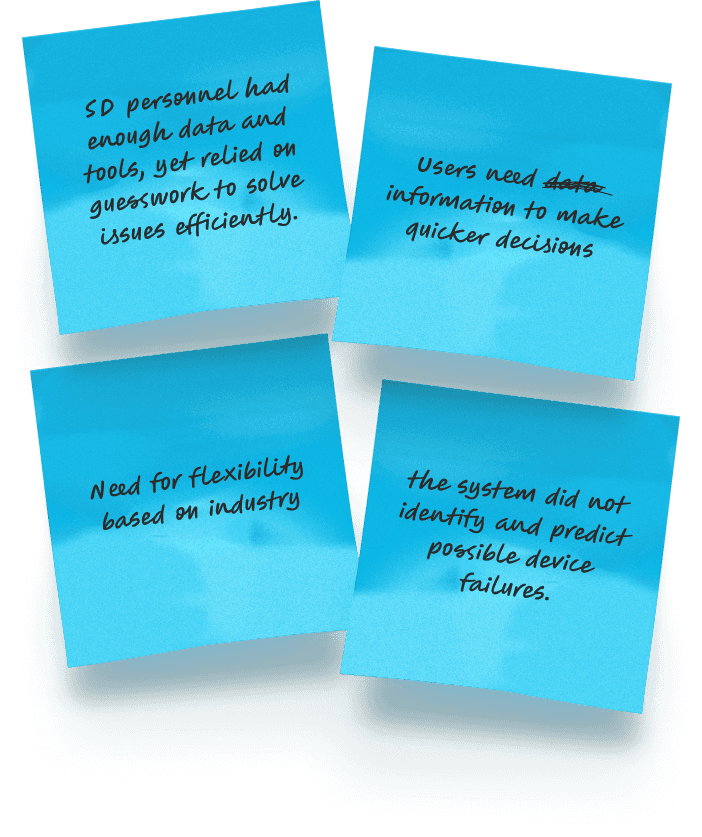
key insights
These findings led to insights like..
Key HMWs that shaped the design
How might we reduce the effort required for L2 and L3 engineers to diagnose device issues?
Temporal trends reduce diagnostic effort by surfacing persistent issues without manual correlation.
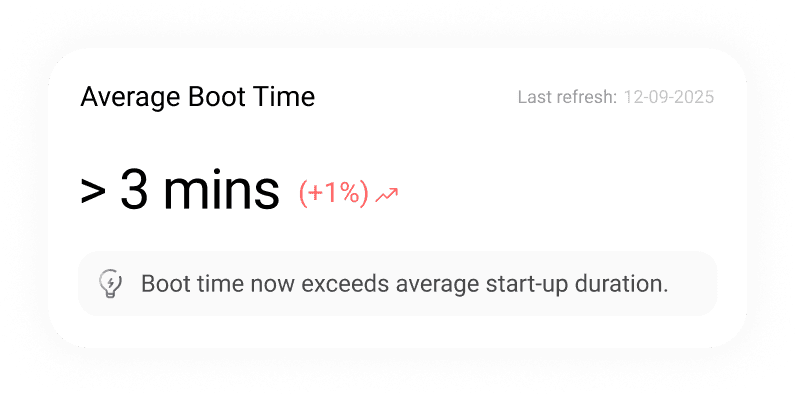
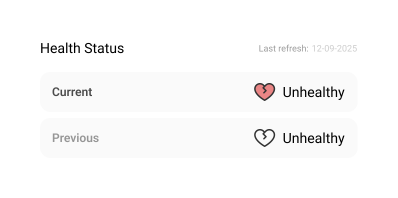
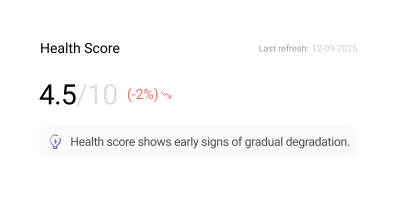
How might we reduce guesswork when engineers make decisions based on device data?
Actionable insights translate raw data into meaning, reducing subjective interpretation.

How might we help engineers understand whether a device issue is normal or anomalous?
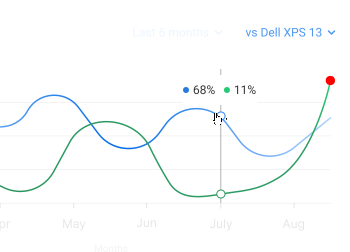
Device performance can be compared against similar devices (eg. comparable developer laptops with similar configurations or roles).
AI-assisted Analysis to support complexity and prevent possible future issues
AI analysis flow was explored, focused on helping Service desk personnel to ask targeted questions, interpret device behaviour over time and understand potential next steps.
the impact
The Data analysis view achieved a 13% reduction in MTTR by reducing diagnostic effort, validated through pilot testing and post-release tracking.
The design also enabled device-level traceability to support compliance readiness across enterprise environments.
Anuja Kulkarni
© 2026. All Rights Reserved.