
How three weeks of research turned a sports technology into a €36.8M opportunity in aviation.
Defined a new expansion opportunity for Lumiflex by designing SwiftTrac, a scalable training system for aviation ground handling teams.
Product-Service System Design
Strategic Foresight
Aviation & Ground Handling
ROLE
Design, Research & Strategy
INDUSTRY
Consumer Technology & Telecommunications
Timeline
April '25 - May '25
undertaken at
Politecnico di Milano


ASB Glassfloor is known for Lumiflex, an LED interactive floor that has wowed audiences in sports arenas.
But could ASB Glassfloor…
use the same technology to solve challenges in complex, high-stakes industries?

final solution
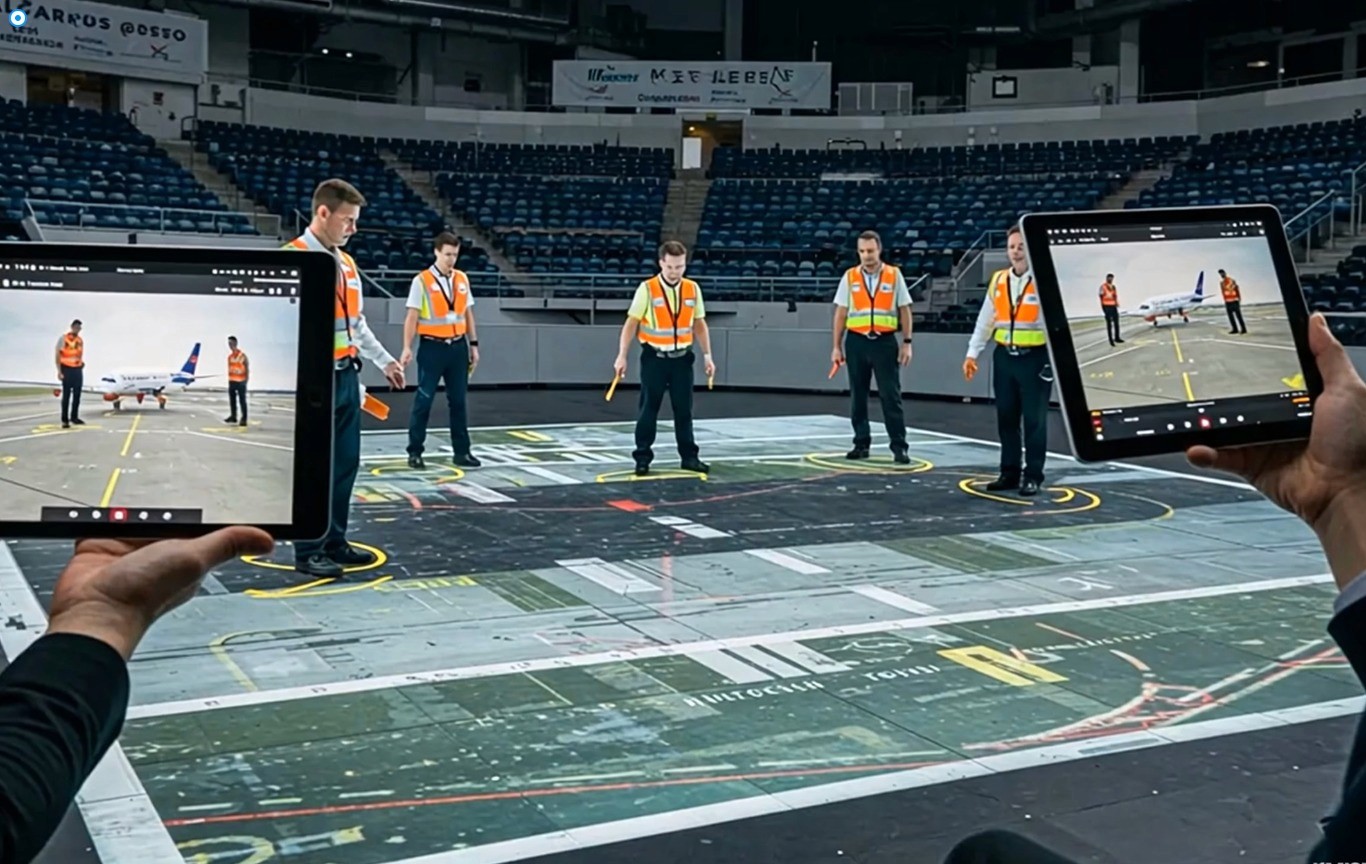
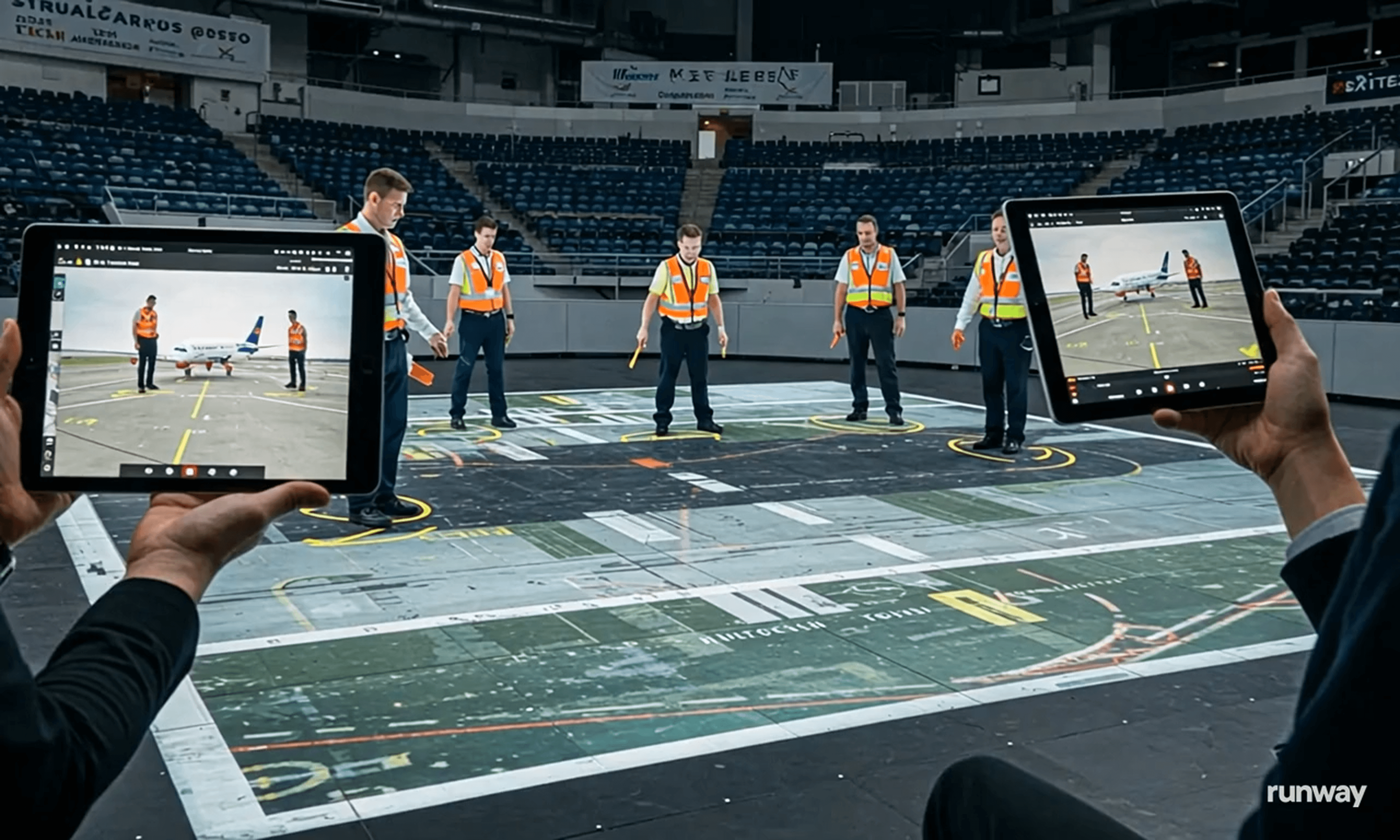
Scalable training arena that enables whole Ground Handling teams to practice in realistic scenarios, gather real-time feedback,
and stay compliant.

impact
Long story short…
We reimagined ASB Glassfloor’s interactive flooring as a scalable training service for aviation ground staff, tackling high turnover, long training cycles, and new bans on on-site training. We designed an immersive arena for teams to rehearse real scenarios, supported by a dashboard with a Readiness Score and a digital twin of the team to track compliance and performance.
Along the way, we addressed critical gaps: reducing dependence on costly simulators, enabling team-based drills, and reframing ASB from a product company into a service ecosystem innovator.
The sprint’s tight three-week window and limited stakeholder access were real hurdles, but they forced sharper decisions and clearer storytelling. The result was a validated business opportunity that showed how immersive tech can deliver resilience, efficiency, and safety where it matters most.
Blue sky
We mapped industries, analyzed case studies, explored (social, technological and economic) signals and trends, and immersed ourselves in how digital surfaces are already reshaping human interaction.


Immersive training boom
Growth of AR/VR showed that companies are experimenting with training beyond classrooms.
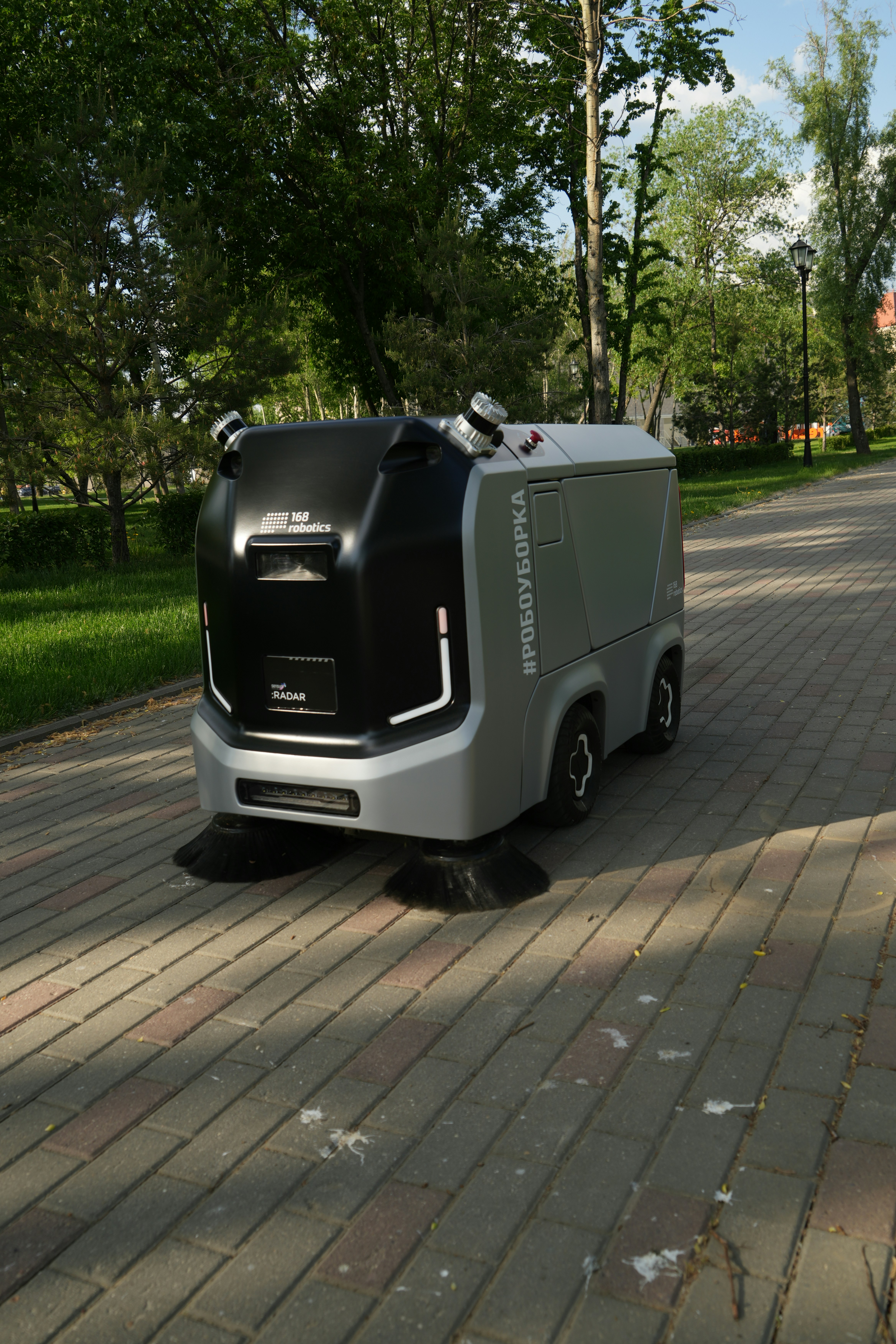
Autonomous vehicles in logistics
Changing how supply chains and warehouses operate, opening opportunities for connected training ecosystems.

Safety and risk management trends
Many sectors invest heavily in training because human error translates directly to lives and millions lost.

Healthy longevity & aging workforce
Need for safer, adaptable training as older workers remain in the labor force.

Dynamic logistics spaces (pop-up fulfillment centers, shared logistics)
Training must also adapt to new, flexible environments.

insights
Raw research to insights. We distilled hundreds of data points into meaning and grouped them into 3 lenses:
Tech
Emerging immersive tech was underutilized in sectors like aviation training.
Risk
Training gaps create safety risks that cost airlines money and reputational trust.
Visibility
Workers often lack real-time visibility of processes, leading to delays and errors
We analyzed multiple industries where immersive training could play a role: healthcare, logistics, and retail.
Ground handling emerged as the most urgent and high-value opportunity. Why?
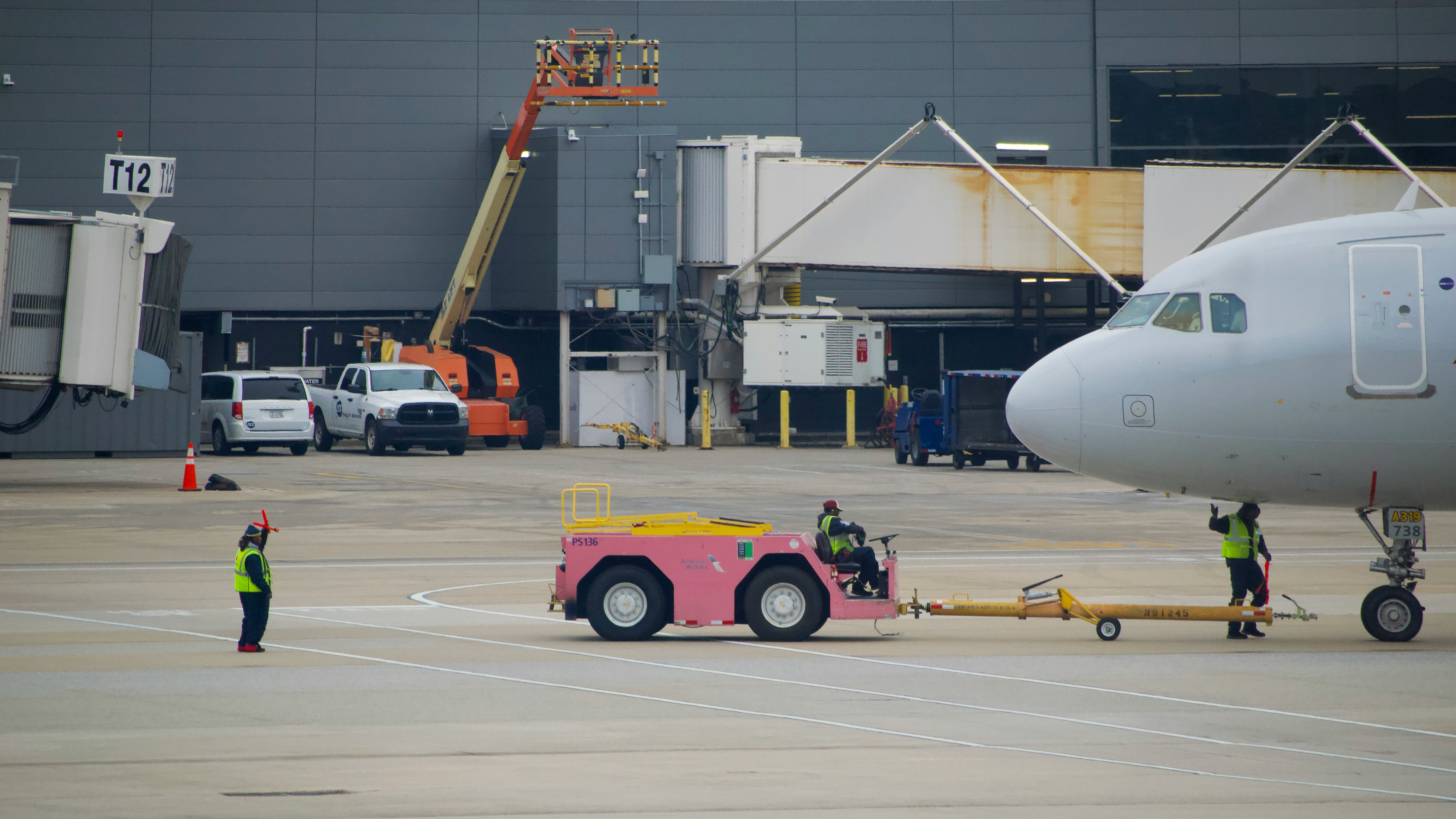
Core problems in ground handling:
INDUSTRY-WIDE TURNOVER CRISIS
30%
annual churn, forcing airlines and service providers to repeatedly re-train staff.
LONG TRAINING CYCLES (SWISSPORT AS THE BENCHMARK)
4-6 weeks
of training cycles, delaying productivity and adding supervision costs.
HIGH SIMULATOR COST
€300K–500K
typically for each simulator to train one role at a time.
COST PER INCIDENT
€10K–20K
in expenses as a result of errors.

The global training market strengthened the opportunity area. Aviation training is a multi-billion-dollar global market, growing at 7–14% CAGR, with airlines and service providers investing heavily in both onboarding and reskilling.
additional constraint
“The first deployment must happen in an arena”
- Team ASB Glassfloor
Originally, we debated setups inside airports or training centres. Why would ground staff train outside airports?
Arenas allow scalability, neutral ground, multi-team training, and align with ASB’s expertise.

user research
Remote stakeholder interviews
Warehouse Manager
Stressed that the biggest errors come from poor team coordination under time pressure, not just individual skills.
Pointed out that manuals and simulators don’t adequately prepare crews for these situations.

“The real challenge isn’t individual skills. It’s when teams have to act under pressure together.”
Ground Handling Manager
Confirmed pain of long onboarding cycles (4–6 weeks).
Highlighted that turnover costs are overtaking training budgets.
Shared a critical signal: many airlines are banning on-the-job training (OJT) due to risks of operational errors and flight disruptions.
This showed the urgency for scalable alternatives like SwifTrac.

“On-the-job training is becoming harder. Airlines don’t want the risk of mistakes during live operations.”

industry research
Moving beyond surface-level research, we combined user flows of ground staff and managers with a deep-dive into training lifecycles (statutory, certification, and organization-specific).
Together, these revealed the systemic gaps our solution needed to address.
User Flow Insights and opportunities
New hires faced disengagement during theoretical sessions, limited practice due to dependence on live equipment, and delayed feedback.
Experienced staff often repeated refresher drills individually due to simulator scheduling constraints, leaving little room for team coordination.
Managers struggled to keep teams compliant amidst high turnover, shifting regulations, and the logistical burden of supervising long onboarding cycles
So what?
Ground staff needed more engaging, repeatable, team-based practice; managers needed real-time visibility; and GHSPs needed a model adaptable to their budget and operational scale.
Training Lifecycle Insights
Statutory & Compliance trainings are globally standardized and recurrent, but their frequency depends on airport size and regulatory bodies.
Certification trainings (valid for 2–3 years) vary in cost and frequency depending on GHSP size and operational complexity.
Organization-specific trainings are inconsistent, often developed internally, and strain budgets at medium-sized airports.
So what?
The problem wasn’t just inefficient delivery methods — it was that training systems were fragmented, costly, and and inflexible across contexts.
Reframed Problem Statement
How might we reimagine training for airport ground handling teams so that it IS scalable for employees, while also increasing efficiency and visibility of training cycles?
look away for 20 seconds, 20 meters away, your eyes need rest
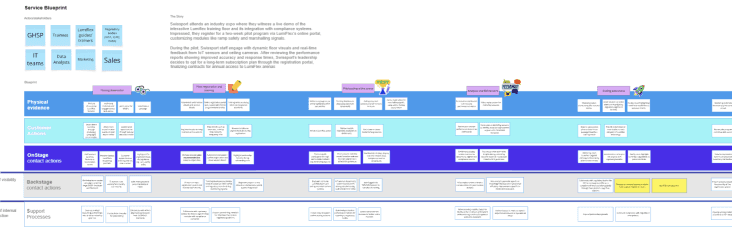
service blueprint
A systems view that connected the trainee experience on the ground with the backstage processes, support systems, and partners required to make SwifTrac work at scale. Key highlights below help decode key decisions, stages and actions.
Piloting
Awareness
Piloting Registration and Training
Piloting Testing at the Arena
Analysis and
Refinement
Scaling
Awareness
Final Conversion and Registration

Key Decision
Pairing live demos with regulatory alignment in marketing, framing SwifTrac as a compliance enabler.
Why it Mattered
Set the stage to create early trust with GHSP decision makers, reduced skepticism and sped up pilot sign-ups.
Physical Evidence
Customer Actions
OnStage Contact Actions
Backstage Contact Actions
Support Processes
Expo booths, demo arenas, marketing materials, regulatory compliance tags.
GHSPs discover SwifTrac at expos, explore demo content, check regulatory fit
Sales/marketing staff demo SwifTrac, explain compliance value.
Marketing campaigns built around compliance, IT ensures demo readiness, regulatory teams align messaging.
Partnerships with IATA/ICAO/EASA, demo-module development, website with interactive demos.
The Product-service-system model
Feature 1/3
Train on ground

External arenas, situated close to airports

Adapt the training to increase difficulty, measure additional KPIs like readiness scores.

Track session performance in real time
Feature 2/3
Measure Performance
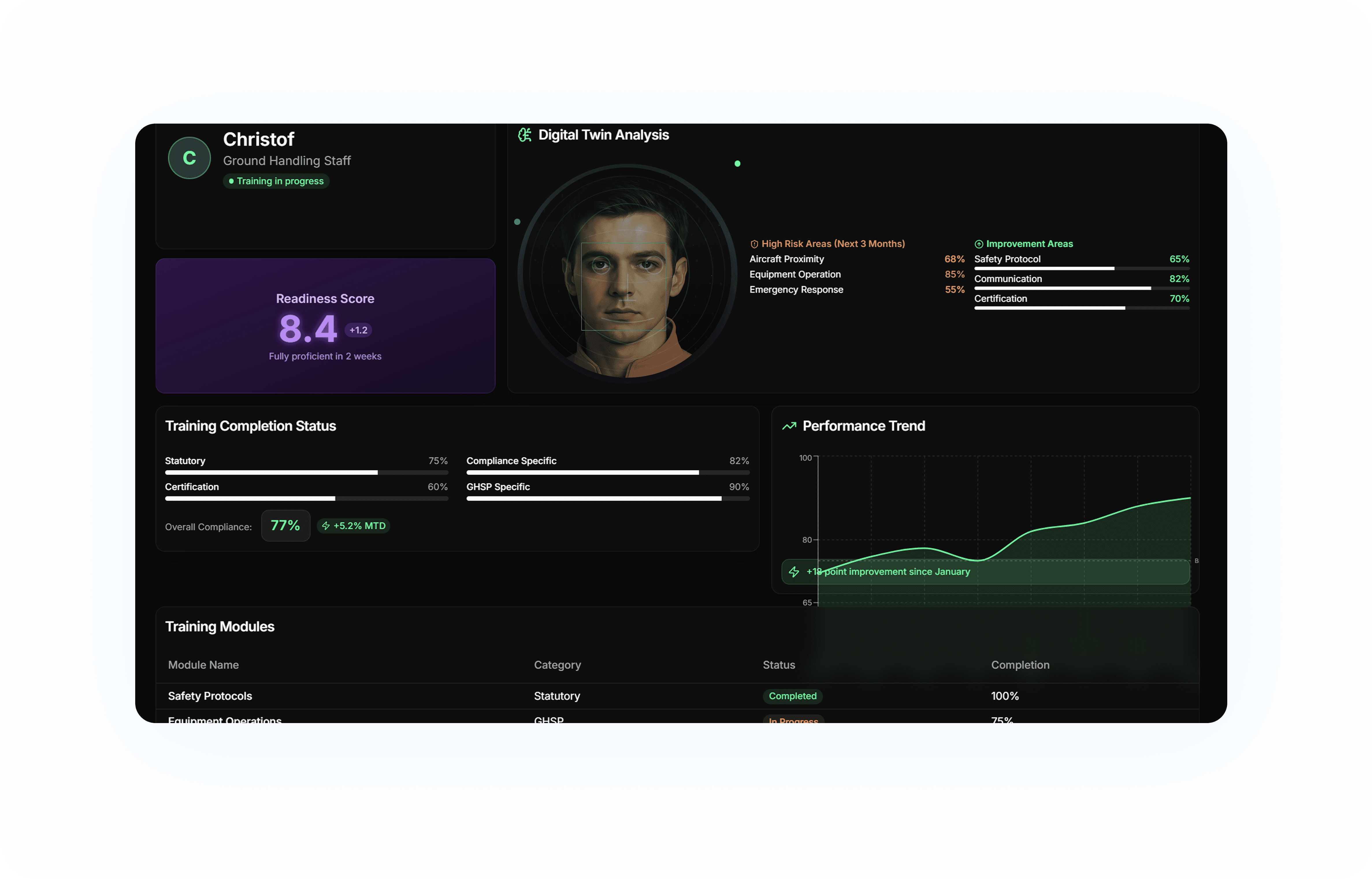

Stakeholders track performances as teams
and individuals

Ensure your workforce is ready to be on ground through forecasts

Increase knowledge retention and reduce onboarding time
Feature 3/3
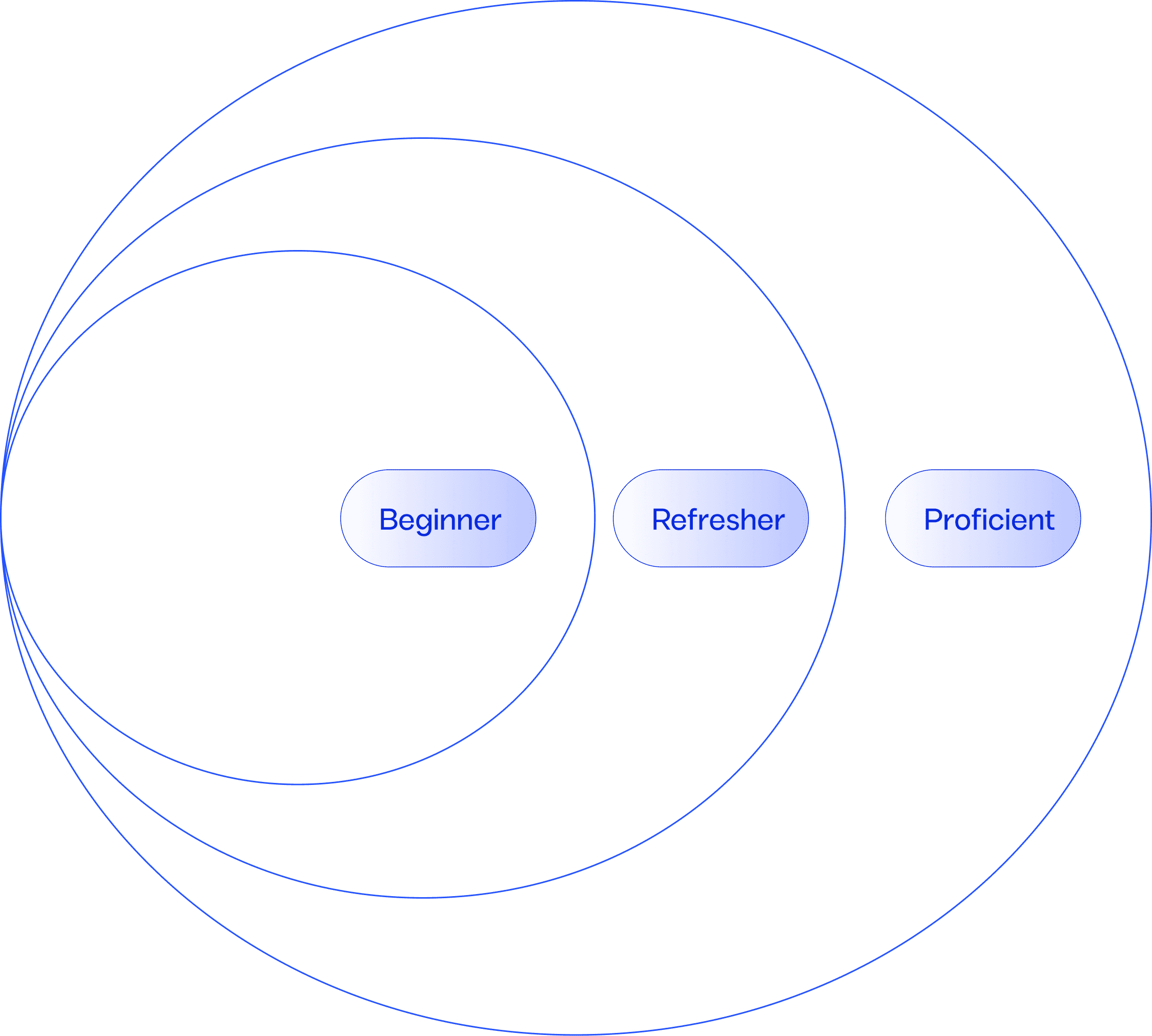
Packaged trainings
with skill based levels
We structured SwifTrac into four clear options:
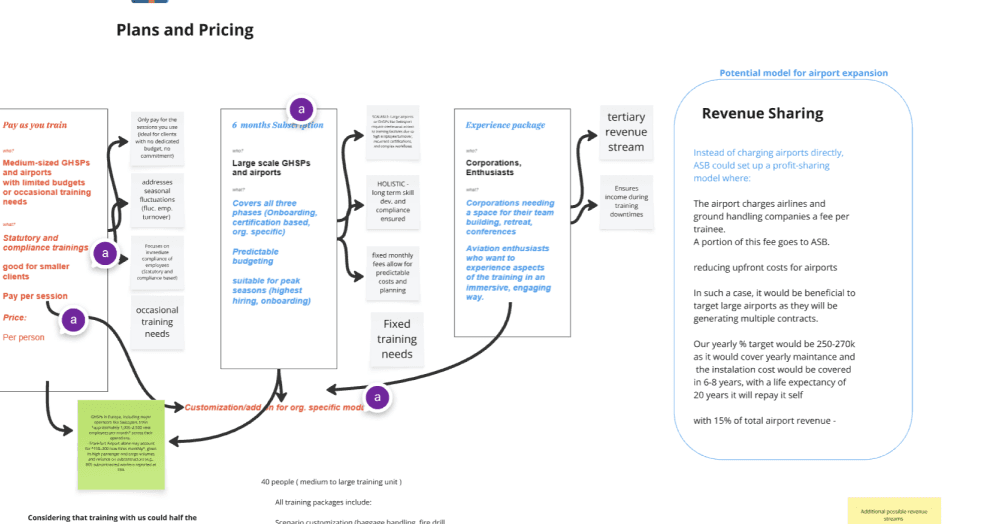
Three subscription plans that scale by employee count and training depth (from statutory compliance through certification to advanced team drills).
one flexible pay-per-use model for smaller GHSPs who train less frequently.
This way, clients choose the path that matches both their regulatory needs and their operational scale
Examples of trainings
(on consulting with stakeholders)
Hazardous Material Handling
Marshalling
Emergency Response
DEMO SCENARIO
Hazardous Material Handling
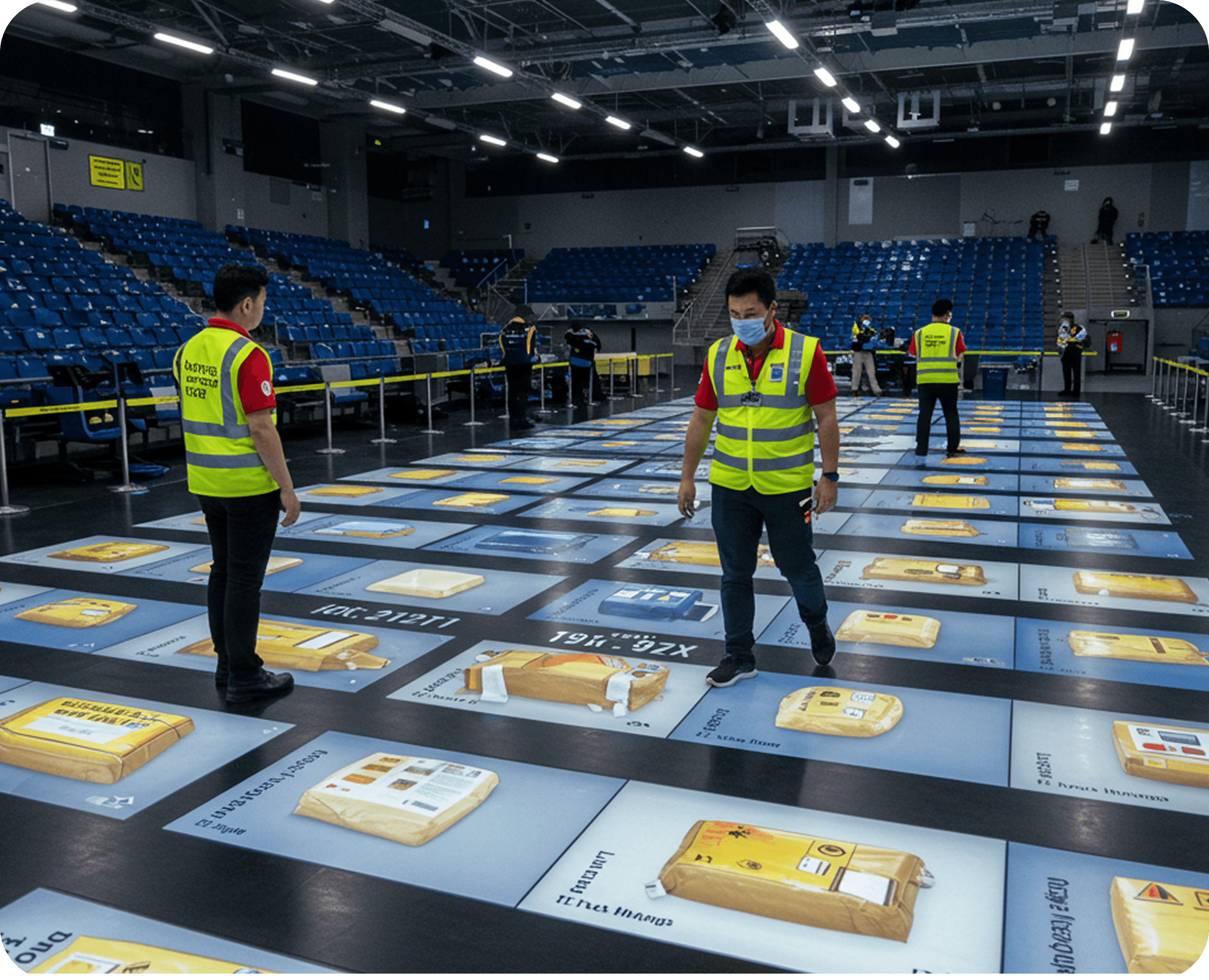
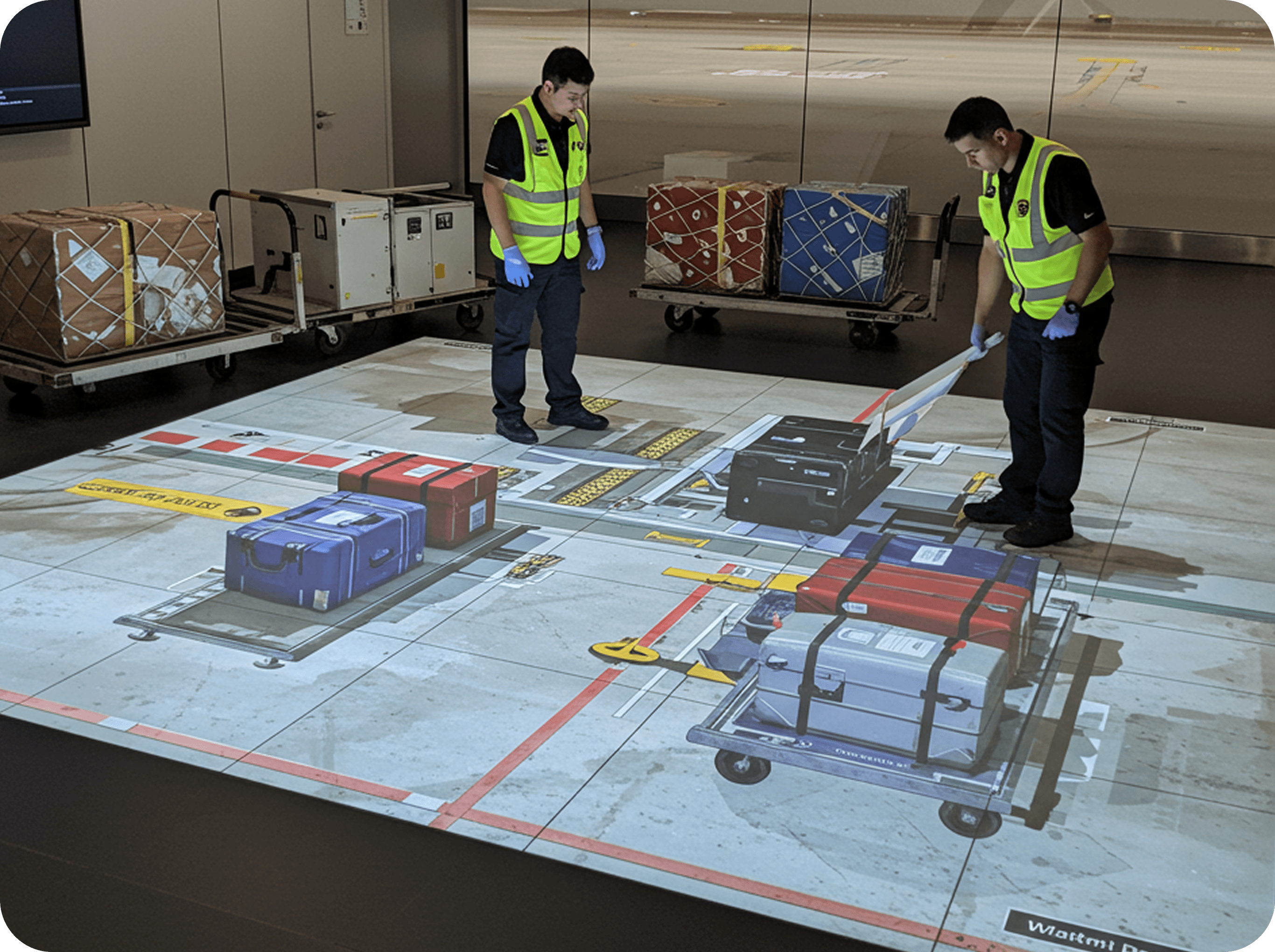

DEMO SCENARIO
Designing the model that makes SwifTrac scale.



Hardware Sales to
Service Subscription
Traditional simulators are capital-intensive hardware sales (€300k–500k per unit). They offer low scalability.
Shifted to subscription model (per employee / per team / per block hours).
We turned a € CAPEX barrier into OPEX flexibility. Clients avoid heavy upfront investment and can scale up/down with turnover rates.



Training as a
Data-driven Service
Feedback in aviation training is anecdotal and delayed.
We planned to sell analytics dashboards & digital twin profiles as a recurring add-on.
Risk forecasting
Performance benchmarks across teams
Compliance tracking (IATA/ICAO)
Training shifted from one-off events to a continuous, data-driven service. Gave GHSPs proof of ROI in management reports.

Ecosystem Partnerships for Co-Branded Modules
GHSPs hesitant unless regulators & OEMs back it.
We saw potential in Involving regulatory bodies (IATA/ICAO) + GSE manufacturers in co-branded training modules.
Turned SwifTrac into industry-endorsed infrastructure instead of just a vendor tool. Increased trust, accelerated adoption.



Packaging Trainings for a Scalable Growth Path
We mapped every ground handling training into four categories (Statutory, Compliance, Certification, Org-specific) and restructured pricing around them
STANDARD - Statutory (the baseline regulators require)
GOLDEN - Statutory + Compliance + Certification (industry-ready workforce)
PLATINUM - All four layers, incl. Org-specific (future-proofed, airline-customized teams)
This reframing aimed to make the offering legible to regulators and HR managers, while also giving ASB a scalable growth path. Clients could start at statutory fast-tracks and graduate into full organizational immersion.
What was our biggest trade-off?
Partnering with GHSPs vs. Airports
We started with GHSPs as the entry point. While this meant scaling would be slower across multiple fragmented players, it gave us:
1
Faster pilot adoption cycles (weeks vs. years with airports).
2
Tighter control over training needs, without waiting for airport-level approval.
This move positioned SwifTrac as a bottom-up adoption tool that solves immediate pain (turnover, OJT bans, training errors). Once validated with GHSPs, it creates proof points that can later unlock top-down partnerships with airports.
Personal Contributions
Team Alignment & Decision-Making, from day 1 through pitch day
Ensured research insights, design directions, and business considerations stayed coherent and
on-track.
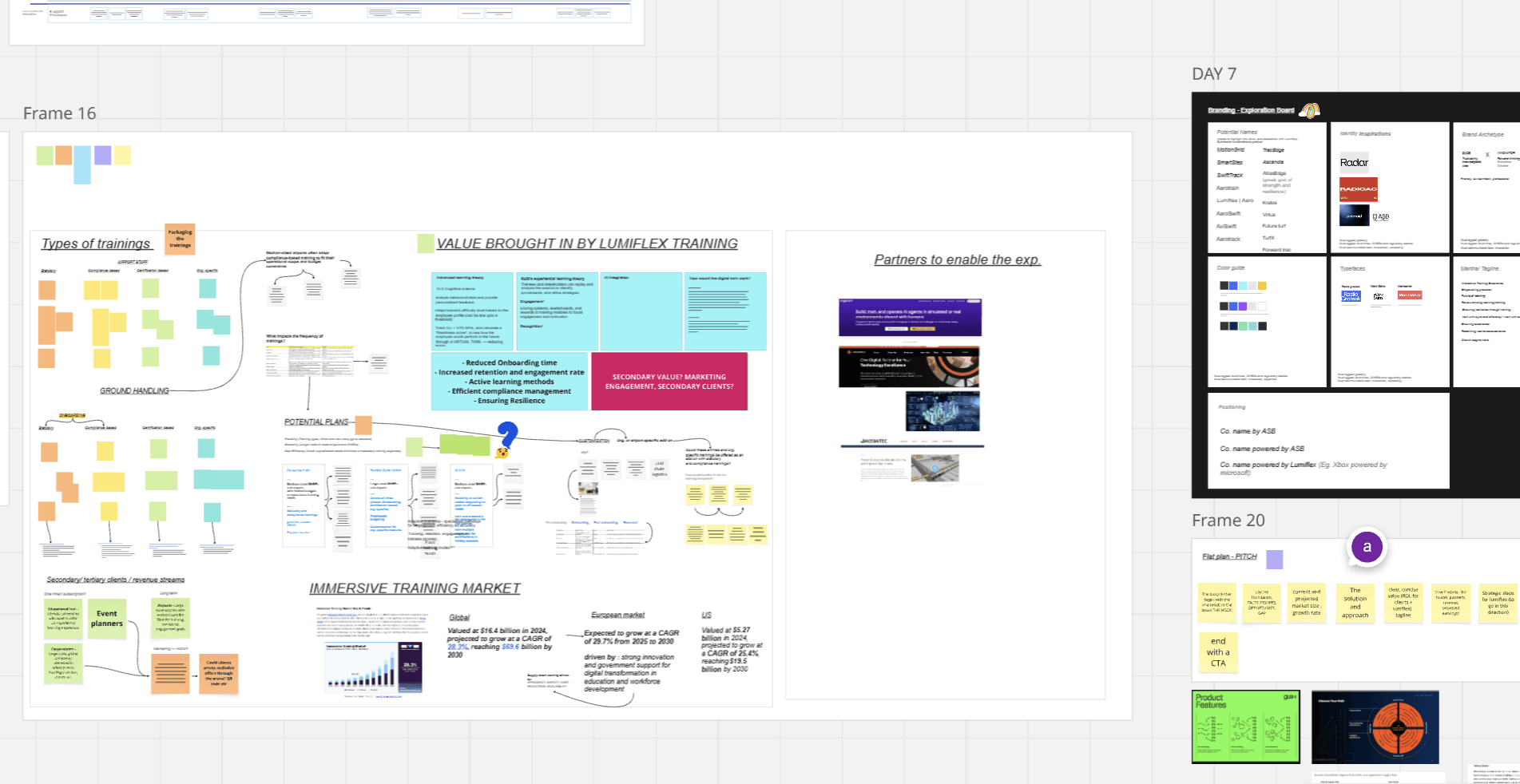
Research Depth & Breadth, Questionnaires & making sense of it all
Including trend analysis, stakeholder and training ecosystem, insight and opportunity generation, research questionnaires, and competitive analysis.
Crafting the Service Blueprint & Business Model
Mapped customer actions, onstage/backstage interactions, and support processes. Highlighted enablers (IT, data analytics, regulatory alignment).
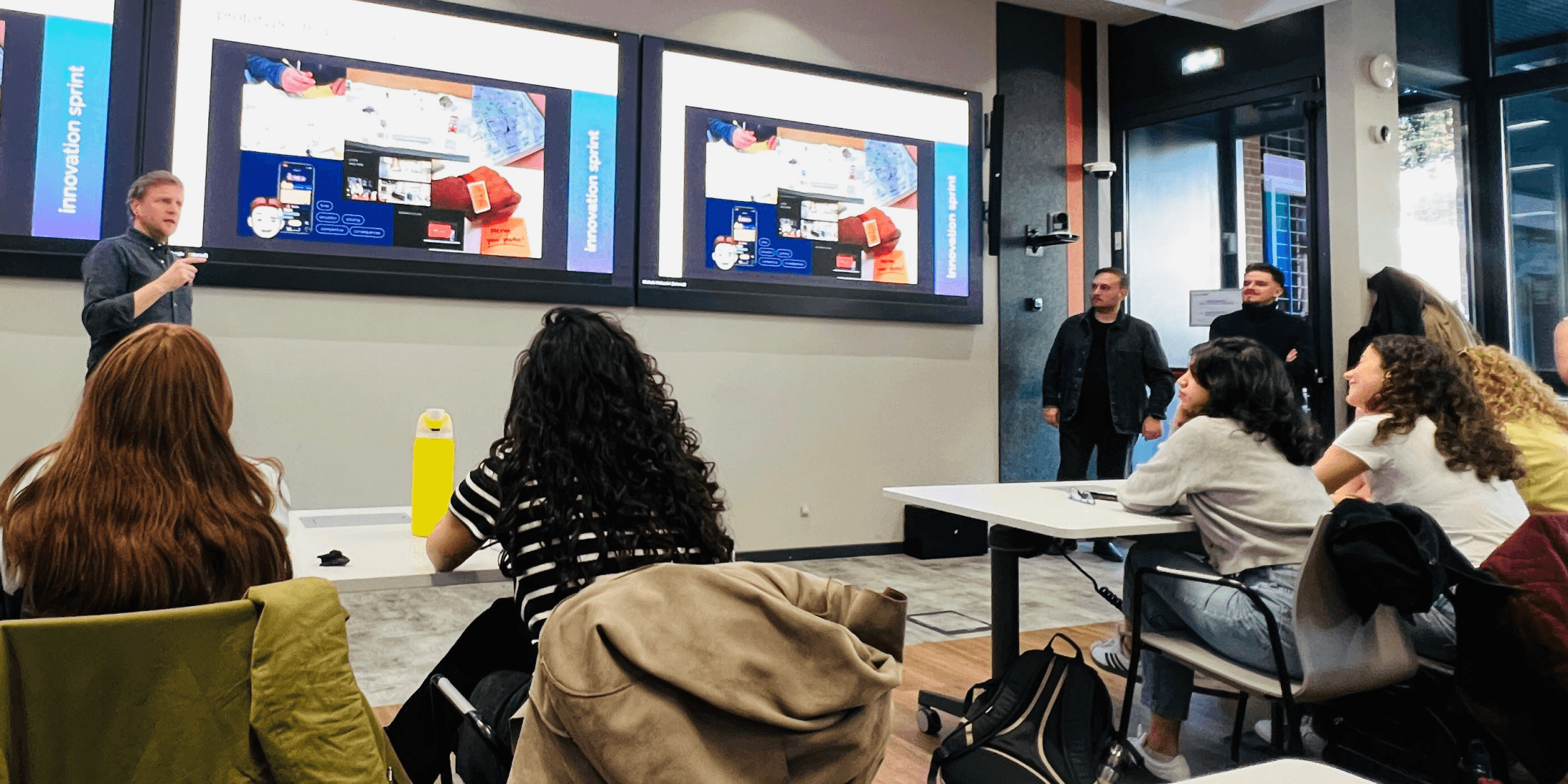
Pitch Day! Co-crafted and Delivered the pitch
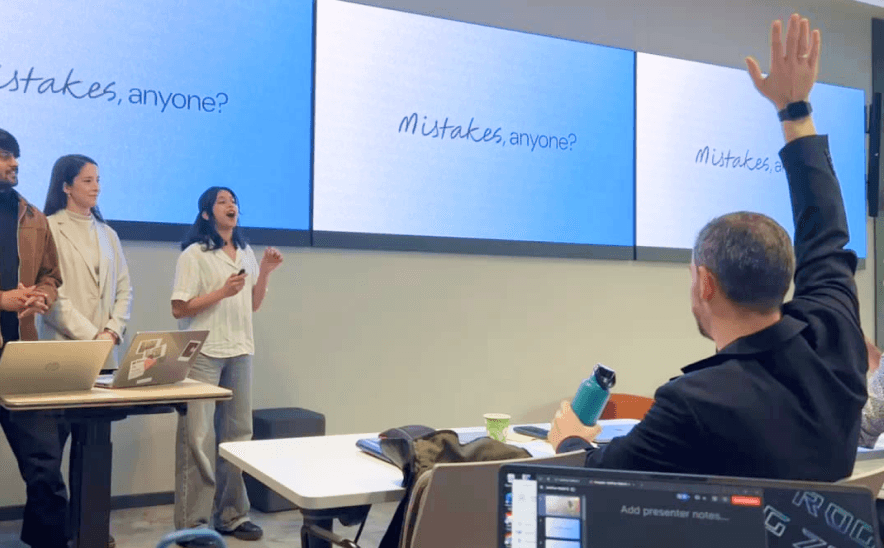
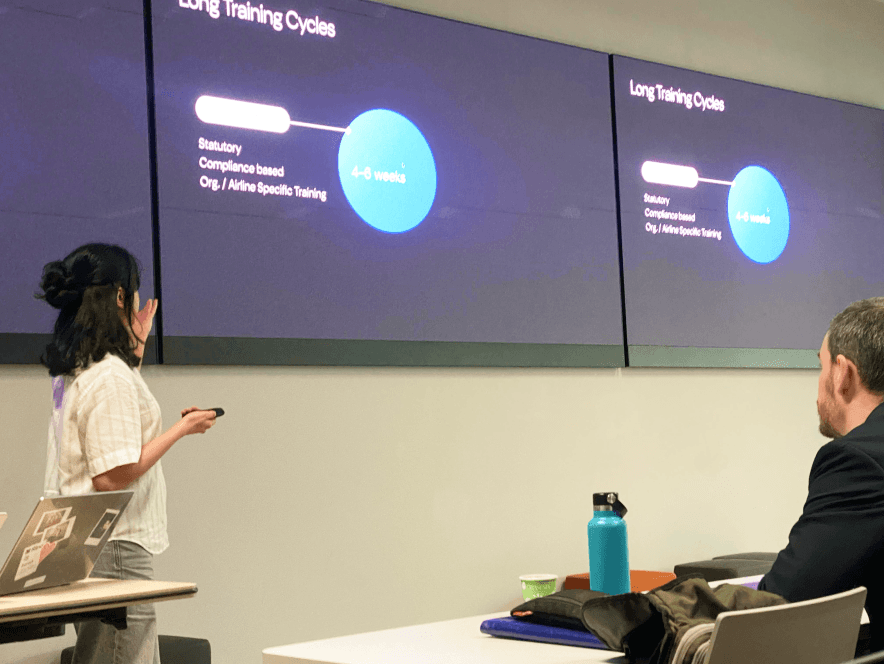
“Mistakes Anyone?” / “How many of those mistakes cost you €308M ?”
Conceptualised the
Dashboard and potential KPIs
Shaped the digital twin dashboard. showing compliance %, readiness levels, and risk zones per employee.
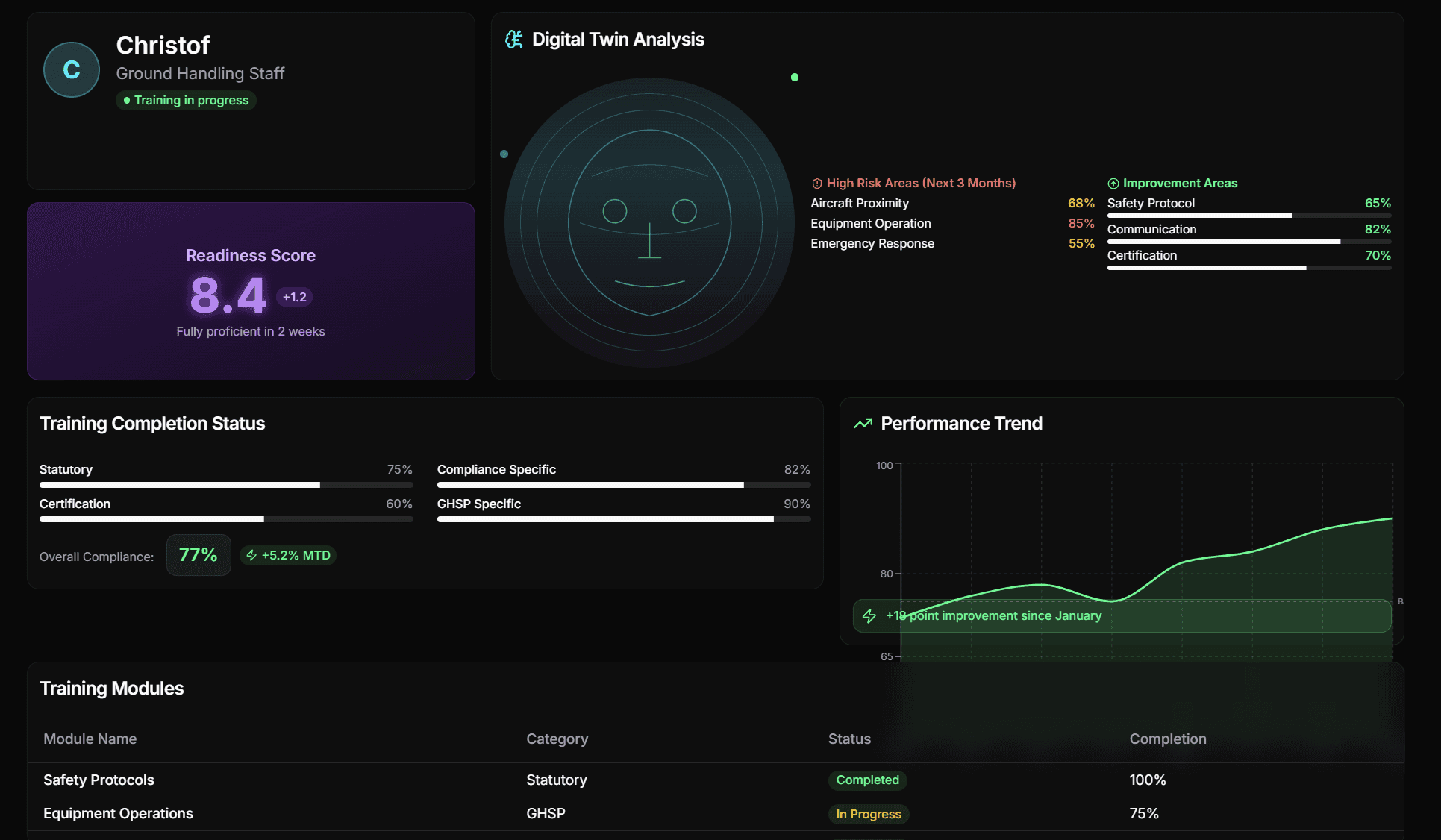

IMPACT
Delivered a validated market expansion strategy for ASB Glassfloor identifying aviation ground handling as a high-value beachhead for Lumiflex technology, and designing a subscription-based training service with a clear pilot path, enterprise pricing model, and ROI dashboard concept.


Anuja Kulkarni
© 2026. All Rights Reserved.